


The Ethiopian Coffee Ceremony
Where Coffee Isn’t Just a Drink — It’s a Way of Life
In Ethiopia, coffee means more than energy or flavor — it means belonging. Long before coffee shops and espresso machines existed, Ethiopians gathered around small stoves and clay pots to brew together, talk, and reconnect.
That gathering is known as the Ethiopian coffee ceremony, one of the most beautiful and intimate traditions in the world. It’s not just about serving coffee; it’s about slowing down and appreciating people, conversation, and shared joy.
How the Ceremony Begins
Every Ethiopian coffee ceremony starts with raw, green coffee beans — unroasted and full of promise. The host slowly roasts them over an open fire, moving the pan back and forth as the rich scent begins to fill the air.
It’s more than aroma; it’s anticipation. Guests watch, chat, and breathe in the warmth of what’s to come. Once roasted, the beans are ground by hand, then brewed in a jebena, a round clay pot with a long spout.
The coffee is poured gracefully from a height — a small act that takes years of practice — into tiny cups called sini. The first sip always feels special: strong, earthy, and deeply personal.
Three Cups, One Connection
Traditionally, three rounds of coffee are served, each symbolizing something different:
-
Abol – the first cup, bold and full of life.
-
Tona – the second, smoother and shared with laughter.
-
Bereka – the final cup, meaning “blessing.”
It’s said that if you drink all three, you become part of the family — and that’s exactly how it feels.
Alongside the coffee, you’ll often find incense burning and snacks like popcorn or roasted barley, making the experience cozy, aromatic, and social.
Kalid Coffee House: Where Tradition Meets Today
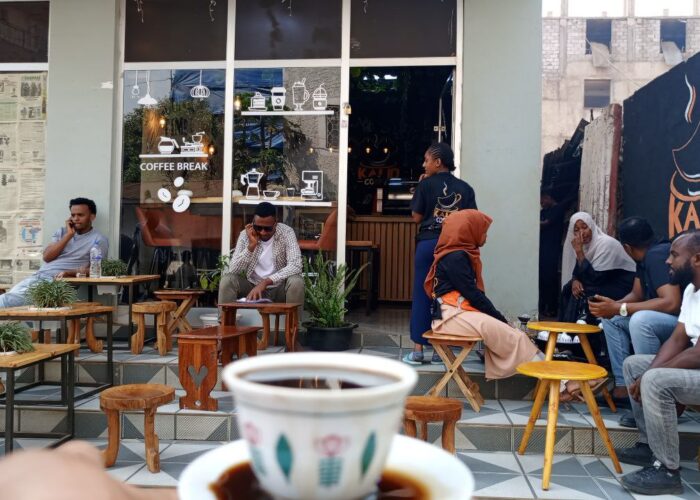
At Kalid Coffee House in Jimma, the birthplace of coffee itself, this ritual isn’t just remembered — it’s celebrated every day.
Kalid Coffee House brings the soul of the ceremony into a modern café setting, offering both traditional jebena coffee and modern brews like macchiatos and cappuccinos. You can sit in the heart of Jimma, surrounded by the scent of freshly roasted beans, and feel centuries of tradition blend seamlessly with today’s energy.
📍 Visit Kalid Coffee House – Jimma (Branch 1)
📍 Visit Kalid Coffee House – Jimma (Branch 2)
A Bridge from Ethiopia to the World
As the world becomes more obsessed with specialty coffee, Ethiopia remains its spiritual home. The global coffee community is looking back to where it all began — to Jimma, to Choche, and to legends like Kaldi, the goat herder who discovered coffee’s magic.
Kalid Coffee House embraces that legacy, reminding visitors that Ethiopian coffee isn’t just something to taste — it’s something to experience. For travelers, it’s an invitation to slow down, sit with locals, and be part of a story that began thousands of years ago.
Why It Matters Today
In a fast-moving world, the Ethiopian coffee ceremony teaches us to pause. To listen. To connect. It reminds us that behind every great cup of coffee is a community, a culture, and a tradition that refuses to fade.
At Kalid Coffee House, that spirit is alive in every roast, every pour, and every smile. Whether you’re visiting Jimma or simply dreaming of Ethiopian coffee from afar, one thing is certain — the story of coffee begins here, and it still lives here.
